
 EN
EN
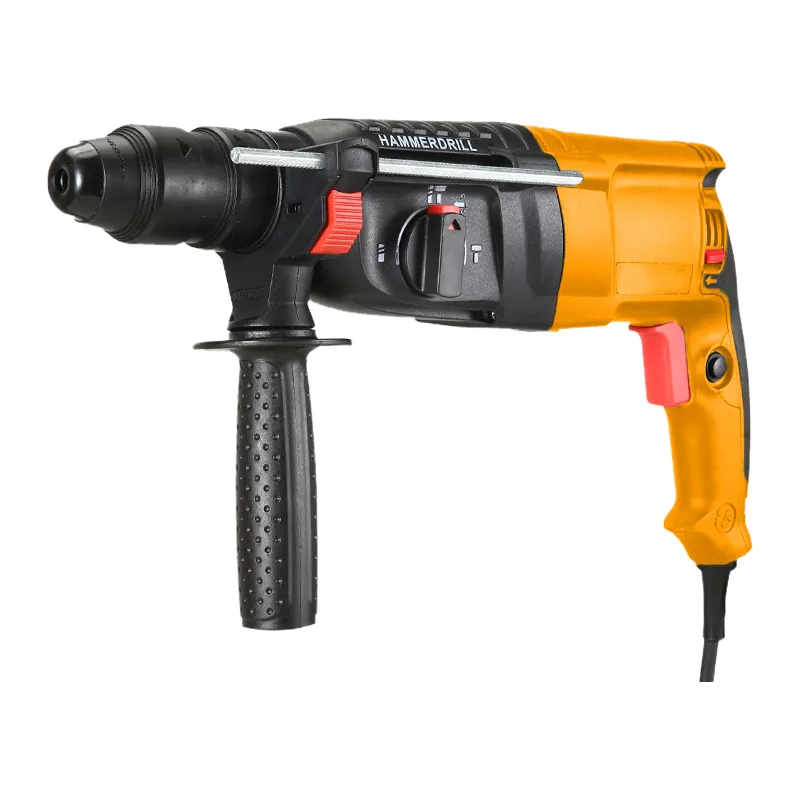
Selecting the right hammer drill for demanding construction applications requires a thorough understanding of performance metrics, durability factors, and specialized drilling capabilities that distinguish professional-grade tools from consumer-level options. As construction projects in 2026 continue to demand greater efficiency and reliability, the hammer drill market has evolved to deliver unprecedented power outputs, advanced impact mechanisms, and enhanced user ergonomics specifically engineered for concrete penetration, brick masonry work, and heavy-duty industrial applications. This comprehensive review examines the critical performance characteristics, durability benchmarks, and drilling efficiency factors that define superior hammer drill models currently available to professional contractors, construction teams, and industrial maintenance operations.

The effectiveness of a hammer drill in concrete drilling operations depends on multiple interconnected factors including impact energy delivery, motor torque characteristics, chuck system reliability, vibration control mechanisms, and thermal management capabilities under sustained drilling loads. Professional contractors evaluating hammer drill options must consider how these technical specifications translate into real-world drilling performance across various substrate densities, ambient operating conditions, and daily workload requirements. This analysis provides detailed comparisons of power delivery systems, construction quality indicators, and operational performance metrics that directly influence productivity rates, tool longevity, and total cost of ownership for hammer drill investments in professional construction environments.
Power Delivery Systems and Motor Performance Characteristics
Impact Energy Output and Concrete Penetration Efficiency
The impact energy rating of a hammer drill fundamentally determines its capability to penetrate dense concrete substrates efficiently, with professional-grade models delivering between 2.5 and 8 joules per impact depending on tool classification and intended application scope. Higher impact energy translates directly to faster drilling speeds in reinforced concrete, reduced operator fatigue during extended drilling sessions, and improved bit longevity through more efficient material fracturing rather than grinding action. Modern hammer drill designs optimize impact energy delivery through precision-engineered striker mechanisms that convert rotational motor force into percussive impacts at frequencies ranging from 4,000 to 6,800 impacts per minute, creating the characteristic hammering action that distinguishes these tools from standard rotary drills.
When comparing hammer drill models for concrete drilling performance, the relationship between impact energy and motor input power provides critical insight into mechanical efficiency and energy conversion effectiveness. A well-designed hammer drill maximizes the percentage of electrical input power converted to useful percussive force while minimizing energy losses to heat generation, mechanical friction, and vibration transmission. Professional contractors should evaluate hammer drill specifications that demonstrate impact energy ratings appropriate to their typical drilling depths and concrete densities, recognizing that oversized impact mechanisms add unnecessary weight and cost for applications not requiring maximum penetration force, while undersized mechanisms result in slower drilling speeds and accelerated wear patterns.
Motor Torque Ratings and Sustained Load Performance
Motor torque characteristics determine a hammer drill's ability to maintain consistent rotational speed under drilling load, directly affecting bit advancement rates, operator control stability, and thermal management during prolonged operations. Professional-grade hammer drill motors typically deliver between 4 and 12 Newton-meters of torque, with higher ratings enabling effective drilling in reinforced concrete containing rebar obstacles, aggregate-dense mixtures, and partially cured substrates that present variable resistance profiles. The torque curve characteristics across the operational speed range reveal how effectively a hammer drill maintains power delivery as bit resistance increases, with superior designs providing relatively flat torque curves that sustain drilling performance even as friction and material density fluctuations occur.
Advanced hammer drill motor designs incorporate electronic speed control systems that monitor load conditions in real-time and adjust current delivery to maintain target rotational speeds despite varying drilling resistance. These intelligent control systems prevent motor stalling in hard substrate encounters, reduce the likelihood of bit binding incidents, and optimize energy consumption patterns to extend battery runtime in cordless models or reduce electrical demand in corded configurations. When evaluating hammer drill motor specifications, contractors should consider not only peak torque ratings but also continuous duty torque capabilities that indicate sustainable performance during extended drilling sessions without thermal derating or protective shutdown events.
Power Input Options and Operational Flexibility
The choice between corded and cordless hammer drill configurations significantly impacts operational flexibility, runtime availability, power delivery consistency, and total system cost including batteries, chargers, and backup power sources. Corded hammer drill models provide unlimited runtime capacity and consistent power delivery throughout extended work shifts, making them ideal for stationary work positions, high-volume drilling operations, and applications where electrical infrastructure is readily accessible. These tools typically deliver higher sustained power outputs compared to battery-powered alternatives, with motor designs optimized for continuous duty cycles and thermal management systems scaled for prolonged high-load operations.
Cordless hammer drill technology has advanced substantially with lithium-ion battery chemistry improvements delivering 18-volt to 36-volt platforms that approach corded performance levels for many professional applications. Modern cordless hammer drill systems incorporate brushless motor technology that increases electrical efficiency by 25 to 40 percent compared to brushed motor designs, extending runtime per battery charge and reducing maintenance requirements through elimination of carbon brush wear components. Professional contractors evaluating cordless hammer drill options should assess battery capacity ratings measured in ampere-hours, charging time requirements, battery availability and cost, and the existence of compatible battery platforms across other power tools in their equipment inventory to maximize investment efficiency.
Durability Factors and Construction Quality Indicators
Housing Materials and Impact Resistance Engineering
The housing construction of a hammer drill determines its resistance to jobsite impacts, environmental exposure, and the cumulative mechanical stresses generated during percussive drilling operations. Professional-grade hammer drill housings utilize high-impact polymer composites reinforced with glass fiber or carbon fiber additives that provide superior strength-to-weight ratios compared to metal housings while offering improved vibration damping characteristics and resistance to chemical exposure from concrete dust, moisture, and construction site contaminants. Critical stress points including motor housing joints, handle attachment interfaces, and chuck mounting regions require reinforced construction with metal inserts or structural ribs to prevent crack propagation from repeated shock loading.
Hammer drill models designed for heavy-duty construction applications incorporate sealed bearing assemblies, dust-protected ventilation systems, and reinforced gear housing components that extend service life in abrasive environments filled with concrete dust, masonry particles, and metal grinding debris. The ingress protection rating of a hammer drill indicates its resistance to dust infiltration and moisture intrusion, with professional models typically achieving IP54 or higher ratings that certify protection against dust accumulation sufficient to interfere with operation and splashing water from any direction. Contractors working in demanding environments should prioritize hammer drill designs with sealed switch assemblies, protected motor ventilation paths, and serviceable dust collection systems that prevent abrasive particle accumulation within critical mechanical components.
Chuck System Reliability and Bit Retention Performance
The chuck mechanism of a hammer drill represents a critical wear point that directly affects bit retention security, power transmission efficiency, and long-term reliability under the extreme vibration and shock loading inherent to percussive drilling operations. Professional hammer drill models utilize SDS-Plus or SDS-Max chuck systems that provide tool-free bit installation, secure retention through ball bearing locking mechanisms, and axial movement allowance that accommodates the percussive action without transmitting damaging shock loads to the bit shank. These standardized chuck interfaces ensure compatibility with professional-grade drill bits engineered specifically for hammer drill applications, with hardened steel shanks and precision-ground retention grooves that resist wear and maintain secure engagement even after hundreds of drilling cycles.
The longevity of hammer drill chuck systems depends on manufacturing precision, material quality, and protective design features that prevent concrete dust and debris infiltration into the ball bearing retention mechanisms. Superior chuck designs incorporate rubber boot seals or integrated dust shields that block particulate intrusion while allowing the necessary axial bit movement during operation, and utilize corrosion-resistant bearing materials that maintain smooth operation despite exposure to moisture and alkaline concrete dust. When evaluating hammer drill durability, contractors should examine chuck wear patterns on existing tools, verify manufacturer replacement part availability, and consider designs that permit field servicing of chuck components to extend overall tool life and maintain optimal bit retention performance.
Vibration Control Systems and Operator Ergonomics
Vibration exposure from hammer drill operation presents significant health concerns for professional operators, with prolonged exposure linked to hand-arm vibration syndrome and cumulative musculoskeletal disorders that reduce workforce productivity and increase injury-related costs. Modern hammer drill designs incorporate sophisticated vibration isolation systems including spring-mounted handle assemblies, counterbalanced striker mechanisms, and elastomeric damping elements that reduce vibration transmission to operator contact points by 40 to 60 percent compared to basic designs. The vibration magnitude measured at the handle grip positions, expressed in meters per second squared, provides quantifiable comparison data for evaluating hammer drill ergonomic performance and regulatory compliance with occupational exposure limits.
Advanced hammer drill models integrate multiple vibration control technologies including active vibration cancellation systems that generate counter-phase oscillations to neutralize transmitted vibration, optimized striker mechanism timing that minimizes off-axis force components, and ergonomically shaped handle designs that distribute grip forces across larger hand contact areas. Professional contractors should evaluate hammer drill vibration specifications in conjunction with typical daily usage patterns to calculate cumulative exposure levels and ensure compliance with occupational safety regulations while maximizing operator comfort during extended drilling sessions. Additional ergonomic considerations include tool weight distribution, handle positioning relative to the drill center of gravity, trigger control accessibility, and auxiliary handle mounting options that accommodate various drilling orientations and operator preferences.
Drilling Performance Optimization for Specific Substrate Materials
Concrete Drilling Strategies and Bit Selection Criteria
Optimizing hammer drill performance in concrete applications requires matching impact energy characteristics, rotational speed settings, and drill bit geometry to the specific concrete composition, aggregate size distribution, curing age, and reinforcement presence within the substrate. Fresh concrete with curing ages less than 28 days presents lower resistance to percussion drilling but higher moisture content that can cause bit clogging and reduced material evacuation efficiency, requiring drill bits with wider flute geometries and more aggressive carbide cutting edge configurations. Fully cured high-strength concrete containing hard aggregate materials demands higher impact energy hammer drill models combined with premium-grade carbide drill bits featuring reinforced tip geometries and optimized flute angles that balance cutting efficiency with debris evacuation capacity.
Professional hammer drill operators should adjust drilling techniques based on real-time feedback from bit advancement rates, motor load indicators, and vibration characteristics that reveal substrate density changes, reinforcement encounters, and bit wear progression. When drilling through reinforced concrete containing steel rebar, transitioning between hammer-only mode for concrete penetration and rotation-only mode for steel cutting preserves bit integrity and maintains optimal drilling efficiency across material transitions. Proper bit selection for concrete drilling applications considers hole diameter requirements, drilling depth targets, and frequency of bit changes acceptable within project schedules, with larger diameter bits requiring proportionally higher impact energy hammer drill models to maintain acceptable penetration rates and avoid premature bit dulling from insufficient impact force delivery.
Brick Masonry Drilling Techniques and Performance Considerations
Brick masonry substrates present distinct drilling challenges compared to poured concrete due to the layered structure of fired clay units separated by mortar joints, creating alternating hard and soft material zones that affect hammer drill bit tracking, penetration rate consistency, and hole quality outcomes. Modern hammer drill models equipped with variable percussion intensity settings enable operators to reduce impact energy when drilling through softer mortar joints, preventing bit breakthrough surges that can cause hole enlargement or substrate cracking at exit points. The drilling approach for brick masonry applications benefits from lower rotational speeds compared to concrete drilling, typically ranging from 500 to 900 RPM, which reduces bit heating and extends cutting edge life when penetrating the abrasive silica-rich composition of fired clay brick materials.
Hole placement accuracy in brick masonry requires careful consideration of brick and mortar joint positioning, with optimal drilling locations typically centered within brick units rather than at brick-mortar interfaces where structural integrity is lower and crack propagation risks are elevated. Hammer drill operators working with historic brick structures or thin-profile brick veneer installations should employ reduced percussion intensity settings and slower advancement rates to minimize vibration transmission that could loosen adjacent masonry units or propagate existing micro-cracks within aged materials. Bit selection for brick masonry drilling emphasizes carbide grades optimized for abrasion resistance rather than impact toughness, with tip geometries featuring more acute cutting angles that efficiently shear through clay materials while maintaining centered tracking through heterogeneous substrate zones.
Heavy-Duty Construction Applications and Specialized Drilling Requirements
Heavy-duty construction environments present hammer drill performance demands that exceed typical residential or light commercial applications, including extended daily runtime requirements, larger diameter hole drilling in structural concrete, overhead drilling positions that increase operator fatigue, and harsh environmental conditions involving temperature extremes, moisture exposure, and abrasive dust concentrations. Professional-grade hammer drill models designed for heavy construction applications incorporate thermal management systems including enlarged motor ventilation paths, temperature monitoring circuitry, and automatic duty cycle management that prevents thermal damage during sustained high-load operations. These advanced tools maintain consistent performance through full work shifts involving hundreds of holes drilled in high-density concrete substrates without requiring extended cooling periods or experiencing power derating.
Specialized heavy-duty drilling applications such as anchor bolt installation in structural concrete, utility penetration core drilling, and demolition-selective material removal require hammer drill capabilities including high torque reserves for large diameter bit rotation, extended percussion stroke lengths for deep hole drilling efficiency, and auxiliary handle configurations that provide stable control during high-force drilling operations. The selection of hammer drill models for heavy construction projects should consider compatibility with dust extraction systems that maintain regulatory compliance with silica exposure limits while improving bit visibility and reducing cleanup requirements. Professional contractors benefit from hammer drill platforms offering multiple operational modes including rotation-only for steel drilling, hammer-only for light chiseling applications, and combined rotation-hammer modes with adjustable intensity settings that optimize performance across diverse drilling and light demolition tasks encountered in complex construction projects.
Comparative Analysis of Key Hammer Drill Performance Metrics
Power-to-Weight Ratio Optimization and Operator Productivity
The power-to-weight ratio of a hammer drill fundamentally influences operator productivity by determining the balance between drilling performance capability and physical handling demands during extended use periods, particularly in overhead positions, confined space applications, and high-volume drilling scenarios. Superior hammer drill designs maximize impact energy delivery and motor torque output while minimizing total tool weight through advanced materials application, compact motor geometries, and integrated structural designs that eliminate redundant components. Professional contractors evaluating hammer drill options should calculate the impact energy per kilogram ratio to identify models delivering optimal performance efficiency, recognizing that tools with ratios exceeding 1.2 joules per kilogram generally provide superior productivity in demanding applications compared to heavier designs with similar power specifications.
Weight distribution characteristics significantly affect hammer drill handling dynamics and operator fatigue patterns, with well-balanced designs positioning the center of gravity close to the handle grip location to minimize wrist strain and improve drilling accuracy. Front-heavy hammer drill configurations create sustained muscular loading on the operator's wrist and forearm during overhead or horizontal drilling positions, accelerating fatigue onset and reducing achievable work duration before mandatory rest periods. Advanced hammer drill engineering employs strategic component placement including rear-positioned battery packs in cordless models, longitudinally compact motor housings, and lightweight composite chuck assemblies that optimize weight distribution while maintaining structural integrity and mechanical performance under operating loads.
Battery Runtime Efficiency and Cordless Performance Benchmarks
Battery runtime performance represents a critical evaluation metric for cordless hammer drill models, directly determining productive work duration between charging cycles and the number of backup batteries required to maintain continuous operation throughout extended work shifts. Modern lithium-ion battery technology delivers energy densities ranging from 150 to 250 watt-hours per kilogram, with higher capacity battery packs providing proportionally longer runtime but adding weight and bulk to the overall tool configuration. Professional contractors should evaluate hammer drill battery performance using standardized test protocols that measure the number of holes drilled per battery charge under specified conditions including hole diameter, drilling depth, substrate density, and environmental temperature to enable meaningful performance comparisons across different models and battery capacity options.
The relationship between hammer drill power consumption characteristics and battery discharge profiles reveals important efficiency differences among competing models, with advanced motor control systems and optimized mechanical designs extracting more useful work per watt-hour of battery capacity. Brushless motor technology substantially improves cordless hammer drill efficiency by eliminating electrical losses associated with carbon brush friction, reducing heat generation that wastes battery energy, and enabling precise electronic control of motor current delivery matched to instantaneous load requirements. When comparing cordless hammer drill models, contractors should consider the total cost of battery ownership including initial purchase prices, replacement costs over the tool's service life, charging time requirements, and compatibility with existing battery platform investments across other cordless tools in their equipment inventory.
Thermal Management and Continuous Duty Performance Capabilities
Thermal management effectiveness determines a hammer drill's ability to sustain maximum power output during extended drilling sessions without requiring cooling intervals or experiencing automatic power reduction through thermal protection circuits. Heat generation in hammer drill motors results from electrical resistance losses in motor windings, mechanical friction in bearing assemblies and gear trains, and inefficiencies in power conversion from electrical input to mechanical output. Professional-grade hammer drill designs incorporate sophisticated cooling systems including optimized ventilation paths that direct ambient air across motor windings and electronic components, heat sink structures that conduct thermal energy away from critical components, and temperature monitoring systems that prevent damage while maximizing available performance duration.
The continuous duty rating of a hammer drill indicates the percentage of time the tool can operate at maximum power output within a standardized time interval, typically expressed as a duty cycle percentage over a 10-minute period. Tools with 100 percent duty cycle ratings sustain full power indefinitely under rated load conditions, while those with lower percentages require rest intervals to prevent thermal damage or protective shutdown. Professional contractors working on high-volume drilling projects should prioritize hammer drill models with continuous duty ratings appropriate to their application demands, recognizing that tools frequently operated near thermal limits experience accelerated wear rates, reduced service life, and increased failure risks compared to adequately specified models with thermal capacity margins above typical operating requirements.
FAQ
What impact energy rating should I choose for drilling concrete in commercial construction applications?
For commercial construction concrete drilling, select hammer drill models with impact energy ratings between 2.5 and 4 joules for holes up to 16 millimeters diameter in standard-strength concrete, while heavy-duty applications involving larger diameter holes or high-strength concrete require tools delivering 5 to 8 joules impact energy. The optimal impact energy depends on your typical hole diameter requirements, concrete density characteristics, and daily drilling volume, with higher impact ratings providing faster penetration rates and reduced operator fatigue but adding tool weight and cost that may not be justified for lighter-duty applications.
How do I minimize vibration exposure when operating a hammer drill during extended work shifts?
Minimize hammer drill vibration exposure by selecting models with integrated vibration reduction systems that achieve handle vibration levels below 10 meters per second squared, using both primary and auxiliary handles to distribute grip forces across larger contact areas, taking regular work breaks to limit cumulative exposure duration, maintaining sharp drill bits that penetrate efficiently without requiring excessive feed pressure, and alternating between different tasks throughout the work shift to vary the specific muscle groups subjected to vibration loading. Additionally, ensure proper drilling technique including allowing the tool's weight and impact mechanism to advance the bit rather than applying excessive manual feed force that increases vibration transmission to the operator.
What maintenance procedures extend the service life of hammer drill tools in dusty construction environments?
Extend hammer drill service life in dusty conditions by performing daily cleaning of ventilation intake ports and motor housing surfaces using compressed air to remove accumulated concrete dust before it infiltrates internal components, weekly inspection and cleaning of chuck mechanisms to prevent debris accumulation that impairs bit retention, periodic lubrication of chuck ball bearings and striker assemblies according to manufacturer specifications, monthly inspection of carbon brushes in brushed motor designs with replacement when worn below minimum length specifications, and annual professional servicing that includes gear lubrication renewal, bearing condition assessment, and electrical connection inspection. Store hammer drill tools in sealed cases when not in use to prevent passive dust accumulation and moisture exposure that accelerates corrosion and mechanical wear.
Can a single hammer drill model effectively handle both concrete drilling and brick masonry applications?
A quality hammer drill with variable speed control and adjustable percussion intensity settings can effectively handle both concrete and brick masonry applications by allowing operators to optimize tool settings for each substrate type, using higher impact energy and moderate rotational speeds for concrete penetration while reducing percussion intensity and lowering rotation speeds for brick drilling that requires more controlled advancement to prevent substrate cracking. Select hammer drill models offering impact energy ratings in the 3 to 5 joule range with electronic speed control spanning 400 to 1200 RPM to provide optimal versatility across both material types, and maintain separate drill bit inventories with carbide grades and tip geometries optimized for each substrate's specific hardness and abrasion characteristics.
Table of Contents
- Power Delivery Systems and Motor Performance Characteristics
- Durability Factors and Construction Quality Indicators
- Drilling Performance Optimization for Specific Substrate Materials
- Comparative Analysis of Key Hammer Drill Performance Metrics
-
FAQ
- What impact energy rating should I choose for drilling concrete in commercial construction applications?
- How do I minimize vibration exposure when operating a hammer drill during extended work shifts?
- What maintenance procedures extend the service life of hammer drill tools in dusty construction environments?
- Can a single hammer drill model effectively handle both concrete drilling and brick masonry applications?
